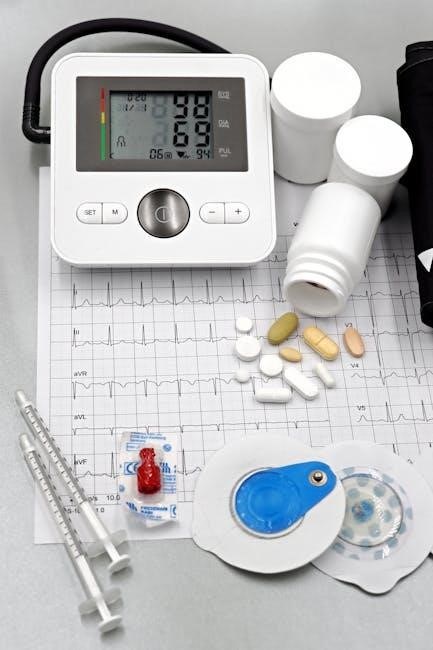
microlife blood pressure monitor manual
Microlife blood pressure monitors offer convenient, accurate home health monitoring. These devices, like the BP3GY1-2N and BP A3, utilize oscillometric techniques for reliable readings, aiding in proactive health management.
Intended Use and Overview
Microlife blood pressure monitors are designed for non-invasive home use, employing oscillometric measurements of systolic and diastolic blood pressure; Microlife VSA is intended for monitoring, not diagnosis. These devices, including models like the BP3SK1-3B, are crucial for individuals managing hypertension or tracking cardiovascular health.
Regular self-measurement, as outlined in the instruction manual, empowers users to understand their blood pressure trends. The monitors are suitable for both office and home environments, providing consistent data. Always refer to the complete manual before operation, ensuring proper technique and interpretation of results.
Key Features of Microlife Monitors (e.g., BP3GY1-2N, BP A3)
Microlife monitors, such as the BP3GY1-2N and BP A3, boast several key features. These include automatic inflation and deflation technology for ease of use, and irregular heartbeat detection for added health insight. Many models offer a memory function, storing measurements for tracking trends.
The WatchBP Home A utilizes a power adaptor (DC 6V, 600mA) and battery operation. “As easy as 123” models prioritize simplicity. Features like average value calculation aid in comprehensive blood pressure management. Always consult the manual for specific model capabilities.
Package Contents and Device Components
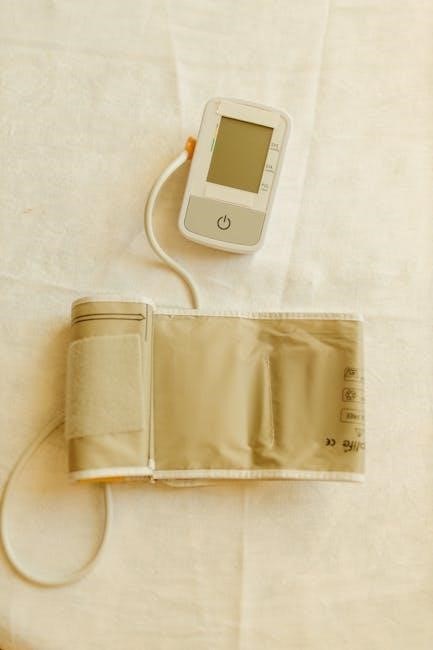
Microlife monitors include the device, cuff, and often a power adapter (DC 6V, 600mA). Carefully identify each component before initial setup and use.
Identifying the Monitor, Cuff, and Accessories
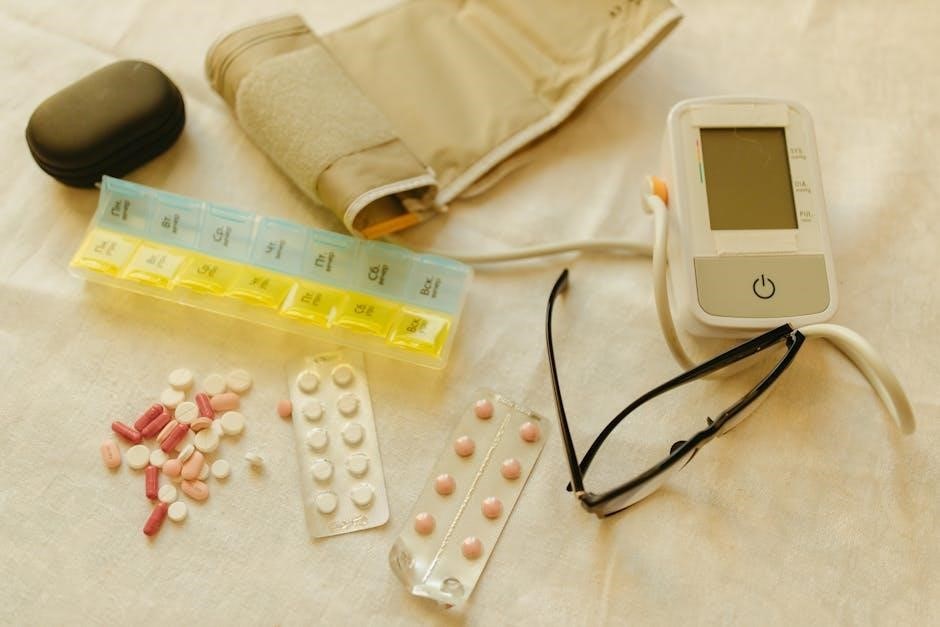
Familiarize yourself with the Microlife monitor’s main unit, noting the power button, start/stop button, and display screen. The cuff is designed for upper arm placement and features a connector for attaching to the monitor. Ensure the cuff size is appropriate for your arm circumference.
Accessories may include a power adapter (DC 6V, 600mA) for alternative power, and potentially batteries. Verify all listed components are present within the packaging. Inspect the cuff for any visible damage before use. Proper identification of each part ensures correct assembly and operation of your blood pressure monitoring system.
Power Adapter Information (DC 6V, 600mA)
Utilizing the Microlife power adapter (DC 6V, 600mA) provides a reliable alternative to battery operation. Plug the adapter into a standard wall socket and connect it to the monitor’s designated port. When the adapter is connected, the device typically bypasses battery power, conserving battery life.
Ensure the adapter is securely connected to both the monitor and the power outlet. Only use the provided Microlife adapter to avoid potential damage to the device. Disconnect the adapter when not in use or during extended periods of non-operation for safety and energy conservation.
Setting Up Your Microlife Monitor
Proper setup involves installing batteries or connecting the DC 6V, 600mA power adapter. Ensure the cuff is correctly attached to the monitor before initial use.
Installing Batteries and Using the Power Adapter
To begin, open the battery compartment, typically located on the back or side of the monitor. Insert the specified type and number of batteries, observing the correct polarity (+ and -) as indicated inside the compartment. Alternatively, you can utilize the provided Microlife power adapter (DC 6V, 600mA).
Plug the adapter’s plug firmly into a wall socket. When the power adapter is connected, the device will bypass battery power, conserving battery life. It’s important to note that using the adapter doesn’t require battery removal, but batteries won’t be utilized during operation. Ensure the adapter is compatible with your local voltage standards.
Connecting the Cuff Correctly
Ensure the cuff is connected to the monitor’s main unit by firmly inserting the tube into the designated connector. A secure connection is vital for accurate measurements. The cuff should be positioned so the artery mark aligns with the brachial artery on your upper arm.
Avoid twisting or kinking the cuff tube during connection, as this can impede airflow and affect reading accuracy. Regularly inspect the cuff and tube for any signs of damage, such as cracks or leaks. Do not attempt to wash or iron the cuff; gentle cleaning with a damp cloth is sufficient.
Taking Accurate Blood Pressure Measurements
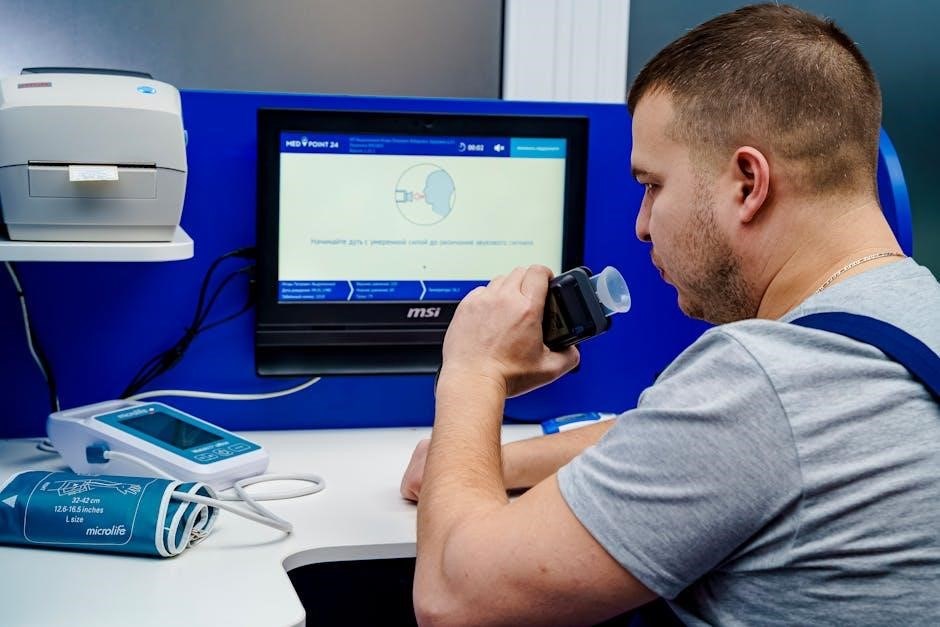
Consistent positioning and proper arm placement are crucial for reliable readings. Avoid talking or movement during measurement, and repeat if needed for confirmation.
Proper Positioning and Arm Placement
To ensure accurate blood pressure readings with your Microlife monitor, proper positioning is essential. Sit comfortably with your back supported and feet flat on the floor. Rest your arm on a stable surface, ensuring it’s at heart level.
The cuff should be placed directly on your bare skin, not over clothing. Position the artery marker on the cuff in line with your brachial artery, typically on the inner side of your elbow. Avoid bending your arm or crossing your legs during the measurement process. Maintaining a relaxed and still posture will contribute to more reliable results.
Step-by-Step Measurement Procedure
Begin by sitting quietly for five minutes before taking a measurement. Attach the cuff correctly, ensuring proper arm placement at heart level. Press the ‘Start’ button and remain still and silent throughout the inflation and deflation process.
Avoid talking or moving during the measurement. The monitor will automatically inflate and deflate the cuff, displaying your systolic and diastolic blood pressure, along with your pulse rate. Record your readings for tracking purposes. If an error occurs, consult the troubleshooting section of the manual and repeat the process.

Understanding Your Blood Pressure Readings
Systolic pressure reflects heart contraction, while diastolic indicates relaxation. Interpret results using established guidelines; consistently high readings warrant medical consultation.
Systolic and Diastolic Values Explained
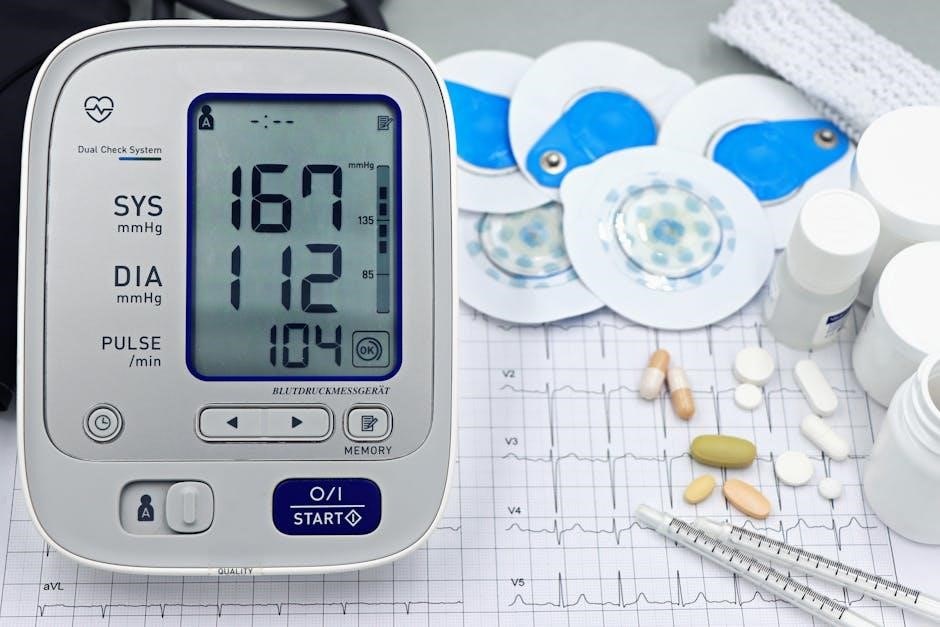
Systolic blood pressure, the top number in a reading, represents the pressure in your arteries when your heart beats – the force with which the heart contracts. It’s a crucial indicator of cardiovascular health. Diastolic blood pressure, the bottom number, measures the pressure in your arteries when your heart rests between beats.
Understanding both values is essential. Elevated systolic pressure often indicates stiffening of arteries with age, while high diastolic pressure can signify increased resistance to blood flow. Regularly monitoring both provides a comprehensive view of your circulatory system’s function. Consistent, accurate readings, facilitated by devices like the Microlife monitor, empower informed health decisions.
Interpreting Results Based on Guidelines
Blood pressure categories are defined by systolic and diastolic values. Normal readings are generally considered below 120/80 mmHg. Elevated readings range from 120-129 systolic and less than 80 diastolic. Hypertension, or high blood pressure, starts at 130/80 mmHg or higher.
Consistent monitoring with your Microlife device is key; never rely on a single reading. Share your results with a healthcare professional for personalized interpretation and guidance. They can assess your overall cardiovascular risk and recommend appropriate lifestyle changes or medical interventions based on established guidelines.

Memory Function and Data Review
Microlife monitors store measurement data for tracking trends. Easily recall past readings and calculate average values to provide a comprehensive overview of your blood pressure.
Storing and Recalling Measurements
Microlife blood pressure monitors are equipped with a memory function designed to store a significant number of previous readings, allowing users to track their blood pressure trends over time. This feature is invaluable for identifying patterns and providing a more complete picture of cardiovascular health.
To access stored measurements, typically a “Memory” button on the device is pressed. This will sequentially display previously recorded systolic and diastolic values, along with the date and time of each measurement. The specific method for navigating the memory may vary slightly depending on the model, but generally involves pressing the same “Memory” button to cycle through the stored data.
Regularly reviewing these stored measurements, alongside consultation with a healthcare professional, can contribute to effective blood pressure management.
Average Value Calculation
Microlife blood pressure monitors often automatically calculate and store the average of your recent blood pressure readings, providing a useful overview of your typical blood pressure levels. This feature simplifies tracking and helps identify potential changes that warrant attention.
Typically, the monitor calculates the average based on the last three or more measurements taken. Accessing the average value usually involves pressing a dedicated “Average” button or navigating through the memory function. The display will then show the calculated average systolic and diastolic pressures.
This automated average calculation assists in providing a more stable and representative blood pressure reading than relying on single measurements.
Troubleshooting Common Issues
Microlife monitors may display error messages or inaccurate readings. Repeating the measurement is often the first step; address irregular heartbeat alerts promptly.
Error Messages and Their Meanings
Microlife blood pressure monitors utilize error messages to indicate potential issues during measurement. Understanding these alerts is crucial for accurate results. A common error suggests movement during inflation – remain still! Another indicates a low battery, requiring replacement or adapter use. An “Err” message might signal a cuff connection problem; ensure it’s securely attached.
Irregular heartbeat symbols necessitate repeating the measurement; consult a physician if persistent. If the monitor displays an overflow error, the cuff may be too small. Always refer to the device’s full instruction manual for a comprehensive list and detailed explanations of all potential error codes and their corresponding solutions.
Addressing Measurement Errors (e.g., Irregular Heartbeat)
Microlife monitors may detect irregular heartbeats during measurement, displaying a corresponding symbol. Don’t panic! First, ensure you’re relaxed and still. Repeat the measurement two or three times. Consistent detection warrants medical attention; share the readings with your doctor.
Other errors, like movement, require stillness during inflation. Low battery or cuff issues also cause inaccuracies – address these promptly. Never rely on a single reading. Multiple measurements, taken correctly, provide a more reliable assessment. Consult the manual for specific troubleshooting steps related to your model.
Cleaning and Maintenance
Regularly clean your Microlife monitor with a soft, dry cloth. Crucially, do not wash or iron the cuff; this can damage its sensitive components.
Device Cleaning Instructions (Soft, Dry Cloth)
To ensure the longevity and accuracy of your Microlife blood pressure monitor, consistent cleaning is essential. Always disconnect the power adapter before initiating any cleaning procedure. Use only a soft, dry cloth to gently wipe the exterior surfaces of the device. Avoid using abrasive cleaners, solvents, or liquids, as these can damage the internal components and void the warranty.
Pay particular attention to areas that come into frequent contact with skin. Do not allow any moisture to enter the device. A slightly dampened cloth (with water only, and thoroughly wrung out) can be used for stubborn marks, followed immediately by a dry cloth. Regular, gentle cleaning will maintain optimal performance and hygiene.
Cuff Care – DO NOT Wash or Iron
Proper cuff maintenance is crucial for accurate blood pressure readings. Absolutely do not wash the cuff in a washing machine or by hand, as this can damage the internal bladder and sensors. Similarly, do not iron the cuff, as the heat will compromise its integrity and calibration. Avoid exposing the cuff to extreme temperatures or direct sunlight.
To clean the cuff’s exterior, gently wipe it with a damp cloth and mild soap, ensuring it is thoroughly dried before reattaching it to the monitor. Store the cuff flat and avoid bending or twisting it excessively. Careful cuff handling ensures reliable performance and extends its lifespan.

Safety Precautions
Always follow instructions carefully. This device is not for diagnosing; consult a healthcare professional for interpretation. Avoid use during activity or stress.
Important Safety Information

Microlife blood pressure monitors are designed for non-invasive blood pressure measurement. Always consult your physician for diagnosis and treatment decisions. This device should not be used for continuous monitoring. Ensure the cuff is appropriately sized for your arm to avoid inaccurate readings or discomfort.
Do not use the monitor on infants or small children. Avoid using the device on limbs with impaired circulation or undergoing intravenous therapy. Never disassemble the monitor or modify its components. Keep the device dry and away from extreme temperatures or direct sunlight. Regularly check for any signs of damage to the cuff or monitor itself.
Contraindications and Warnings
Microlife monitors are not intended for use on individuals with significant arrhythmias or severe circulatory problems. Avoid use if you’ve had a mastectomy or lymph node removal on the measurement arm. The device may not be accurate during acute medical conditions or if experiencing significant tremors.
Do not rely solely on single readings; multiple measurements are recommended. Be cautious when interpreting results if you have pre-existing medical conditions. Avoid self-treating based on monitor readings; always consult a healthcare professional. Do not use the monitor while driving or operating machinery. Keep out of reach of children.