map test practice 7th grade pdf
Article Plan: Map Test Practice 7th Grade PDF
This comprehensive guide details essential map skills for 7th graders, incorporating practice with global locations like Prague, Toronto, Sydney, and beyond.
Seventh grade marks a crucial stage in developing geographical understanding. Students begin to move beyond simply identifying locations to analyzing spatial relationships and interpreting complex map data. This involves mastering core skills like reading map titles, understanding legends, utilizing compass roses, and accurately interpreting map scales.
Furthermore, proficiency in latitude and longitude is paramount, alongside the ability to calculate distances using map scales. Recognizing physical features – mountains, rivers, deserts – and political boundaries – countries, states, cities – forms the foundation of geographical literacy.
This skillset isn’t just academic; it’s essential for navigating the world and understanding global events. Preparing for map tests requires focused practice and familiarity with diverse map types.
Why Map Skills are Important for 7th Graders
Map skills extend far beyond the classroom, fostering critical thinking and problem-solving abilities. Understanding maps allows students to analyze spatial data, interpret patterns, and make informed decisions about the world around them. These skills are vital for comprehending current events, understanding historical contexts, and appreciating diverse cultures.
Moreover, map reading enhances geographical literacy, enabling students to navigate effectively and appreciate the interconnectedness of places like Prague, Toronto, Sydney, and Kuala Lumpur.
Strong map skills also support success in other subjects, such as history, social studies, and even science, providing a foundational understanding of our planet.
Types of Maps Covered in 7th Grade
Seventh-grade geography curricula typically explore three primary map types: physical, political, and thematic maps. Physical maps illustrate landforms like mountains, rivers (such as the Vltava in Prague), and deserts, showcasing the natural landscape. Political maps focus on human-defined boundaries – countries, states (like those in Canada’s Ontario), and cities.
Thematic maps present specific data related to a particular topic, like population density or climate patterns, offering insights into regions like New South Wales, Australia or Malaysia’s Kuala Lumpur.
Understanding the purpose and characteristics of each map type is crucial for effective interpretation and analysis.
Physical Maps
Physical maps emphasize the natural landscape features of Earth. These maps illustrate variations in elevation, including mountains, hills, and plains, and prominently display bodies of water like rivers – the Vltava bisects Prague – and lakes. They often use color gradients to represent altitude, with greens for lower elevations and browns or whites for higher peaks.
Students learning with physical maps will identify features in locations like New Zealand’s harbours or Australia’s terrain. Understanding these maps is fundamental for grasping geographical relationships and environmental characteristics across regions like Poland and Malaysia.
Political Maps
Political maps focus on human-defined boundaries and divisions. They clearly delineate countries – like the Czech Republic, Malaysia, and Canada – states or provinces (Ontario), and cities (Toronto, Kuala Lumpur, Prague). These maps utilize colors to distinguish different political entities, aiding in the identification of national borders and administrative regions.
Seventh-grade students will practice locating capitals like Sydney and Kraków on political maps. Mastery of these maps is crucial for understanding geopolitical relationships and the organization of the world, including New Zealand and Poland’s locations.
Thematic Maps
Thematic maps showcase specific data related to a particular topic or theme. Unlike physical or political maps, they aren’t focused on landforms or boundaries, but rather on patterns and distributions. Examples include maps displaying population density, climate zones, or even air quality – a relevant consideration for cities like Toronto, Sydney, and Kuala Lumpur.
Seventh-grade practice will involve interpreting data presented on thematic maps, potentially relating to the regions of Czechia, Poland, New Zealand, or Australia. Understanding these maps builds analytical skills and connects geography to real-world issues.
Key Map Elements: Understanding the Basics
Mastering map elements is crucial for 7th-grade success. These foundational components unlock a map’s information. A map title clearly indicates the map’s subject, while the legend/key deciphers symbols used. The compass rose shows directional orientation – essential for locating places like Prague or Auckland.
Perhaps most importantly, the scale allows students to calculate distances between locations, whether across Canada, Australia, or Poland. Practice tests frequently assess understanding of these elements, requiring students to interpret and apply them effectively.
Map Title
The map title is the first point of contact, immediately revealing the map’s focus. It succinctly describes the geographic area or theme presented – is it a political map of Europe, a physical map of Australia, or a thematic map of Kuala Lumpur’s population density?
Seventh-grade map tests often begin with questions directly related to the title. Students must accurately interpret what the title indicates about the map’s content, understanding if it depicts countries, cities like Toronto, or physical features like rivers in Czechia.
Legend/Key
The legend, or key, is crucial for deciphering a map’s symbols and markings. It explains what each symbol represents – a specific type of city (like Auckland, New Zealand), a mountain range, a river (such as the Vltava in Prague), or a political boundary like those separating provinces in Canada.
Seventh-grade map tests frequently assess a student’s ability to correctly interpret these symbols. Questions might ask, “What does the shaded area on the map of Poland represent?” or “Identify the symbol for a capital city.” Mastering the legend unlocks the map’s information.
Compass Rose
The compass rose indicates directional bearings – North, South, East, and West – and their subdivisions. Understanding cardinal and intermediate directions is fundamental to map reading, essential for locating places like Sydney, Australia, or Kuala Lumpur, Malaysia.
Map tests often require students to determine the relative location of cities or physical features. For example, “Is Toronto, Canada, north or south of New York?” or “In what direction would you travel from Prague to Kraków?” A solid grasp of the compass rose is vital for accurate spatial reasoning and test success.
Scale
A map scale represents the relationship between distance on a map and the corresponding distance on the ground. It’s crucial for calculating real-world distances between locations like Auckland, New Zealand, and Toronto, Canada.
Map tests frequently present scenarios requiring distance calculations. Students might need to determine the approximate distance between Prague and Kraków, or Sydney and Kuala Lumpur, using the map’s scale. Understanding scale – whether represented as a ratio, fraction, or graphic scale – is paramount for accurate measurement and interpreting map information effectively.
Reading Map Coordinates: Latitude and Longitude
Latitude and longitude are the fundamental coordinates used to pinpoint any location on Earth, essential for map reading skills. Students must accurately identify coordinates for cities like Sydney, Australia, or Kuala Lumpur, Malaysia, on practice maps.
Map tests often require locating places using these coordinates, or conversely, determining the coordinates of a given location. Understanding that latitude lines run east-west and longitude lines run north-south is key. Proficiency in reading and interpreting these coordinates is vital for navigating and understanding global geography, including places like Prague and Toronto.
Using Map Scales to Calculate Distance
Map scales represent the relationship between distance on a map and the corresponding distance on the ground, a crucial skill for 7th-grade map tests. Students will practice calculating distances between cities like Auckland, New Zealand, and Kraków, Poland, using provided scales.
This involves understanding ratios and applying them to measure distances on the map. Tests frequently present scenarios requiring students to determine real-world distances based on map measurements. Mastering this skill is essential for interpreting maps effectively and applying geographical knowledge to real-world locations.
Identifying Physical Features on Maps
A core component of 7th-grade map skills involves recognizing and labeling key physical features across diverse landscapes. Practice focuses on identifying mountains, rivers, lakes, deserts, and plains on maps showcasing locations like Sydney, Australia, and Kuala Lumpur, Malaysia.
Students will learn to differentiate these features based on map symbols and coloration. Map tests commonly require pinpointing these elements and understanding their impact on geography and climate. Successfully identifying these features builds a foundational understanding of Earth’s physical characteristics.
Mountains
Mastering mountain identification is crucial for 7th-grade map tests. Students must recognize mountain ranges using contour lines, hachure marks, and shading on maps. Practice involves locating mountains in various regions, including areas near Kraków, Poland, and throughout New Zealand’s North Island, around Auckland.
Understanding how mountains influence climate, river systems, and population distribution is also key. Tests often ask students to analyze the impact of mountainous terrain on surrounding areas, demanding a comprehensive grasp of their geographical significance.
Rivers and Lakes
Identifying rivers and lakes is a fundamental 7th-grade map skill. Students should be able to trace river courses, like the Vltava River bisecting Prague, Czechia, and pinpoint major lakes on various maps. Practice includes recognizing how these bodies of water impact transportation, agriculture, and settlement patterns.
Map tests frequently assess understanding of how rivers form boundaries, provide water resources, and contribute to regional climates. Analyzing the relationship between rivers, lakes, and nearby cities, such as Toronto on Lake Ontario, is also essential.
Deserts and Plains
Recognizing deserts and plains is crucial for 7th-grade map analysis. Students must differentiate these landforms based on their characteristics – aridity for deserts and flat, grassy terrain for plains. Map exercises should focus on locating major deserts globally and identifying expansive plains regions.
Understanding how these features influence climate, vegetation, and human activity is key. Tests often require students to correlate landforms with population density and agricultural practices. For example, recognizing how plains support farming versus the challenges of desert life builds geographical literacy.
Identifying Political Boundaries on Maps
Mastering political boundaries is fundamental for 7th-grade map skills. Students need to accurately pinpoint countries, states/provinces, and major cities on various maps. Practice should include recognizing borders using different map projections and understanding how these boundaries define sovereignty and administrative regions.
Exercises should incorporate real-world examples like identifying Canada’s provinces, Australia’s states, or the Czech Republic’s location within Europe. Tests frequently assess the ability to connect political units with their capitals and geographical contexts.
Countries
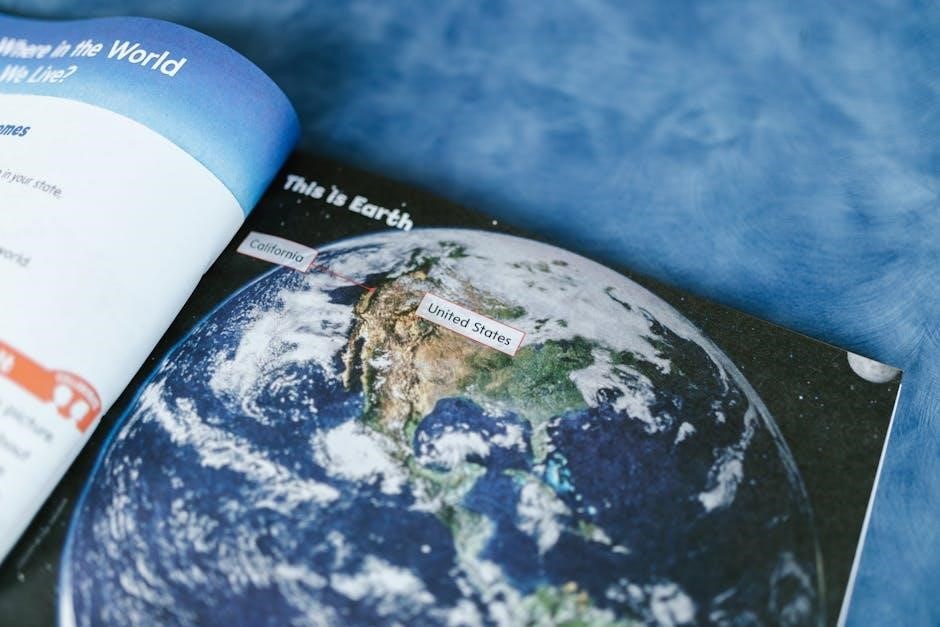
Identifying countries accurately is a core 7th-grade map skill. Students must learn to locate major countries across all continents, understanding their relative positions and sizes. Practice involves recognizing country shapes, associating them with their capitals (like Kuala Lumpur in Malaysia or Prague in Czechia), and understanding their regional contexts;
Map tests often require students to name countries based on their outlines or pinpoint their locations using latitude and longitude. Familiarity with countries like Canada, Australia, Poland, and Malaysia is crucial for success;
States/Provinces
Beyond countries, 7th-grade map tests frequently assess knowledge of states and provinces. Students need to identify these internal divisions within larger nations, such as recognizing New South Wales within Australia or Ontario within Canada (specifically, locating Toronto).
Understanding the spatial relationships between states/provinces and their bordering entities is key. Practice includes locating them on maps, knowing their capitals, and understanding their geographical features. Tests may ask students to identify a state/province given its location or outline, reinforcing geographical literacy.
Cities
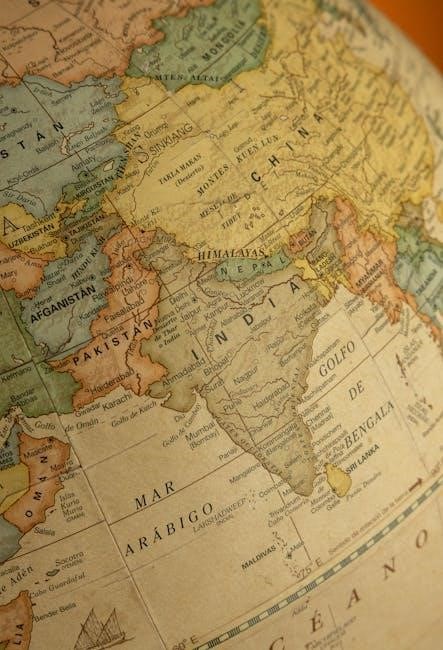
Identifying major cities is a cornerstone of 7th-grade map skills assessment. Students must pinpoint locations like Prague (Czechia), Toronto (Canada), Sydney (Australia), Kuala Lumpur (Malaysia), Auckland (New Zealand), and Kraków (Poland) on various map projections.
Tests often require recognizing cities based on their geographical context – for example, knowing Sydney is on Lake Ontario’s northwestern shore or Kuala Lumpur is dominated by the Petronas Twin Towers. Practice involves associating cities with their respective countries, states/provinces, and significant landmarks, solidifying spatial awareness.
Common Map Test Questions for 7th Grade
7th-grade map tests frequently assess coordinate reading (latitude/longitude) and distance calculations using map scales. Expect questions requiring identification of physical features – mountains, rivers like the Vltava in Prague, deserts, and plains.
Political boundaries are also key; students must locate countries, states/provinces, and cities like Toronto, Sydney, Kuala Lumpur, Auckland, and Kraków. Tests often present scenarios asking for directions or relative locations. Understanding map elements (title, legend, compass rose) is crucial, as is applying these skills to real-world locations.
Finding 7th Grade Map Test Practice PDFs Online
Numerous websites offer free, downloadable 7th-grade map test practice PDFs. A simple Google search using keywords like “7th grade map skills practice PDF” yields many results. Look for resources that align with your curriculum, focusing on skills like identifying locations (Prague, Toronto, Sydney, Kuala Lumpur, Auckland, Kraków), reading coordinates, and interpreting map elements.
Educational websites and teacher resource platforms often host printable worksheets and quizzes. Preview PDFs to ensure content quality and relevance before assigning them to students for effective preparation.
Recommended Websites for Map Practice
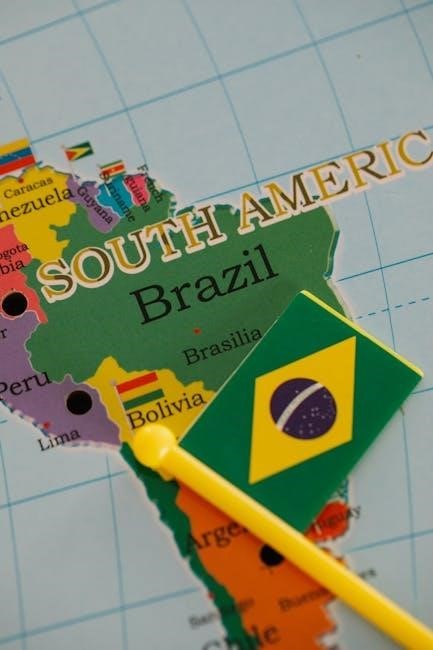
Several online platforms excel in providing interactive map practice for 7th graders. Google Maps is invaluable for exploring real-world locations like Prague, Toronto, Sydney, and beyond, fostering geographical understanding. Seterra (seterra.com) offers customizable map quizzes focusing on countries, states, and cities.
Sheppard Software (sheppardsoftware.com) provides engaging geography games. Lizard Point (lizardpoint.com) features quizzes on physical and political maps. These resources allow students to reinforce skills in a fun, accessible manner, preparing them effectively for map tests.
Utilizing Google Maps for Educational Purposes
Google Maps is a powerful educational tool for 7th-grade geography. Students can virtually explore cities like Prague, Toronto, Sydney, Kuala Lumpur, Auckland, and Kraków, identifying key landmarks and geographical features.
Utilizing the measurement tool helps calculate distances, reinforcing scale comprehension. Examining satellite views aids in recognizing physical features – rivers, mountains, deserts.
Google Maps’ street view offers immersive experiences, enhancing spatial reasoning. Teachers can create custom maps highlighting specific locations for focused practice, preparing students for map test scenarios.
Map Skills Practice with Real-World Locations: Prague, Czechia
Prague, bisected by the Vltava River, offers excellent map practice. Locate Prague on a European map using latitude and longitude. Identify its position relative to neighboring countries like Germany and Poland.
Students can pinpoint the Old Town Square and estimate distances between landmarks using map scales. Practice identifying the city’s physical features – the river, surrounding hills.
Challenge students to find specific streets or neighborhoods. This exercise reinforces understanding of map keys, symbols, and the ability to interpret political boundaries within Czechia.
Map Skills Practice with Real-World Locations: Toronto, Canada
Toronto, situated on Lake Ontario’s northwestern shore, provides a practical map reading exercise. Students should locate Toronto within the province of Ontario and Canada as a whole. Practice identifying its coordinates and relative location to major US cities.
Using map scales, estimate the distance between Toronto and Ottawa, Canada’s capital. Identify key landmarks like Lake Ontario and major roadways.
Challenge students to locate different neighborhoods within the dynamic metropolis and interpret the city’s political boundaries, reinforcing map comprehension skills.
Map Skills Practice with Real-World Locations: Sydney, Australia
Sydney, the capital of New South Wales, offers excellent map practice opportunities. Students can pinpoint Sydney’s location on the Australian continent and determine its coordinates.
Practice using map scales to calculate distances between Sydney and other major Australian cities like Melbourne or Brisbane. Identify the iconic Sydney Harbour and the Opera House on various map types – physical and political.
Challenge students to locate surrounding national parks and understand how physical features influence the city’s development, enhancing their geographical understanding.
Map Skills Practice with Real-World Locations: Kuala Lumpur, Malaysia
Kuala Lumpur, Malaysia’s capital, provides a fantastic setting for 7th-grade map skill reinforcement. Students can locate Kuala Lumpur on a map of Southeast Asia and identify its surrounding countries.
Practice determining the city’s latitude and longitude coordinates. Challenge them to find the Petronas Twin Towers and other landmarks on different map projections.
Using map scales, calculate distances to nearby cities like Singapore or Jakarta. Explore how the city’s location influences its climate and economic activities, deepening geographical comprehension.
Map Skills Practice with Real-World Locations: Auckland, New Zealand
Auckland, New Zealand, situated around two large harbours, offers excellent map practice for 7th graders. Students can pinpoint Auckland’s location on a world map and identify its position relative to Australia and other Pacific islands.
Practice locating Viaduct Harbour and the iconic Sky Tower using map coordinates. Utilize map scales to calculate distances between Auckland and other New Zealand cities like Wellington.
Investigate how Auckland’s harbour location has shaped its development and trade routes, enhancing their understanding of geographical influences.
Map Skills Practice with Real-World Locations: Kraków, Poland
Kraków, a southern Polish city near the Czech Republic border, provides a rich context for 7th-grade map skills practice. Students can locate Kraków on a European map and identify its neighboring countries, reinforcing their understanding of political boundaries.
Practice identifying the city’s well-preserved medieval core and Jewish quarter using map keys and symbols. Explore how Planty Park encircles the old town, analyzing its impact on urban planning.
Utilize map scales to estimate distances between Kraków and other major Polish cities, enhancing spatial reasoning skills.
Tips for Success on 7th Grade Map Tests
Thorough preparation is key to excelling on 7th-grade map tests! Regularly practice identifying countries, states, cities, and physical features like rivers and mountains. Master reading latitude and longitude coordinates, and confidently calculate distances using map scales.
Pay close attention to map legends and symbols – understanding these is crucial. Review different map types (physical, political, thematic) and their unique purposes.
Don’t rush; carefully read each question and double-check your answers. Utilize online resources and practice PDFs for targeted skill development.
Resources for Further Map Skills Development
Expand your geographical knowledge beyond the classroom! Google Maps offers an interactive platform for exploring locations worldwide, aiding in practical application of map reading skills. Numerous websites provide free, downloadable map practice PDFs tailored for 7th-grade curriculum.
Consider utilizing educational games and apps that gamify learning map concepts. Explore national geographic resources for detailed maps and geographical information.
Don’t hesitate to consult textbooks and supplementary materials for a comprehensive understanding of cartography and spatial reasoning.