
application to vary avo form nsw
Understanding the NSW AVO Variation Application (Form Nsw)
Form NSW facilitates requests to alter existing Apprehended Violence Orders (AVOs), allowing applicants like Mark Howard to seek modifications based on changed circumstances.
What is an AVO and Why Vary It?
An Apprehended Violence Order (AVO), under the Crimes (Domestic and Personal Violence) Act 2007, legally protects individuals from harassment, intimidation, or violence. These orders impose specific conditions on the defendant, restricting their contact with the protected person(s), Didier and Saabeah Hasan in this instance.
However, circumstances evolve. Varying an AVO becomes necessary when the original order’s conditions are no longer appropriate or justifiable. For example, Mark Howard’s application stems from his planned interstate relocation, anticipating no further contact. A variation isn’t about dismissing the initial concerns, but adapting the order to reflect current realities and potentially reduce restrictions while maintaining safety.
The Crimes (Domestic and Personal Violence) Act 2007
The Crimes (Domestic and Personal Violence) Act 2007 is the foundational legislation governing AVOs in New South Wales. This Act outlines the grounds for obtaining an AVO, the types of conduct constituting domestic and personal violence, and the procedures for applying to the court.
Crucially, it also details the process for varying or revoking existing orders, as exemplified by Mark Howard’s application. The Act empowers the Local Court to modify AVO conditions based on presented evidence of changed circumstances. Understanding this legislation is vital, as all applications, like the one filed on May 1st, 20XX, must adhere to its provisions and requirements for a successful outcome.

Eligibility for Varying an AVO
Eligibility hinges on demonstrating genuine changes in circumstances, such as relocation – like Mark Howard’s interstate move – to the court’s satisfaction.
Grounds for Application ⎼ Moving Interstate
A key ground for varying an AVO, as exemplified in the case of Mark Howard, is the applicant’s relocation to another state. This necessitates demonstrating that the move will eliminate future contact with the protected person(s), Didier and Saabeah Hasan.
The application must clearly state the intended date of departure – May 13th, 20XX, in Howard’s instance – and the new address. Evidence supporting the relocation, such as a lease agreement or employment contract in the new state, strengthens the application. The court assesses whether the interstate move genuinely reduces the risk posed by the defendant, justifying a variation to the AVO’s conditions or duration. Essentially, the applicant must prove the physical distance removes the potential for further incidents.
Grounds for Application ─ Changes in Circumstances
Beyond relocation, significant life changes can form the basis for an AVO variation application. These circumstances must demonstrably alter the risk initially prompting the order. Applicants must articulate how their situation has evolved since the original AVO was granted, impacting the need for its continued strict enforcement.
Examples include successful completion of anger management programs, a prolonged period of peaceful conduct, or a change in the protected person’s wishes. Supporting documentation – like certificates of completion or statutory declarations – is crucial. The applicant, like Mark Howard, must convince the court that the original risk factors no longer apply, and a variation is warranted to reflect the current reality.
When a Variation Might Be Granted
A variation to an AVO isn’t automatic; the court requires compelling evidence of changed circumstances and a reduced risk to the protected person. Successful applications, like the one potentially filed by Mark Howard, demonstrate a genuine shift in the dynamic between parties.
The court will carefully assess the applicant’s grounds, supporting documentation, and any police submissions. A history of compliance with the original order strengthens the case. Variations are more likely when the protected person consents, though not essential. Ultimately, the court prioritizes safety and will only modify an AVO if satisfied the protected person’s well-being won’t be compromised.
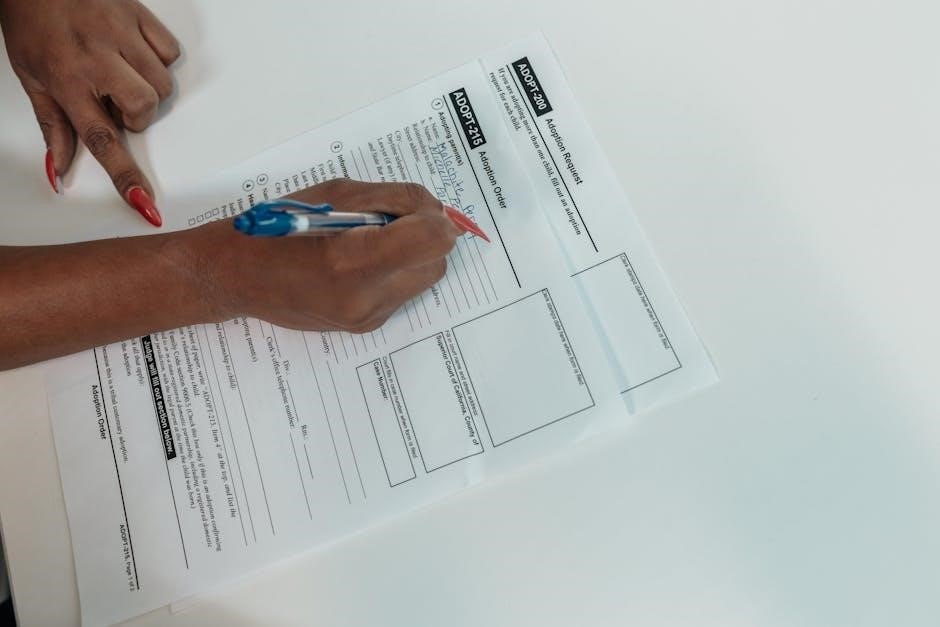
Completing the Application Form
Form NSW requires detailed information about the applicant, defendant (potentially Mark Howard), and protected persons (Didier & Saabeah Hasan), alongside the existing AVO details.
Applicant Details Section
This section of Form NSW demands comprehensive information from the individual initiating the variation request – in the provided sample, Mark Howard. Crucially, applicants must provide their full legal name as it appears on official documentation. Further details required include the applicant’s current residential address, specifically 319 Pith Street, Merrylands NSW 2160, as listed in the example.
Contact information, such as a phone number and email address, is also essential for court communication. The form necessitates clarity regarding the applicant’s role in the original AVO proceedings. Finally, applicants are required to sign and date the application, affirming the accuracy of the provided details, as indicated by “M. Howard (Signed on Co” in the sample document.
Defendant Details Section
The Form NSW requires meticulous details about the defendant, the individual against whom the original AVO was issued. As exemplified in the provided document, this includes the defendant’s complete legal name – also listed as Mark Howard. While the sample form doesn’t explicitly detail date of birth/age, this information is generally required for accurate identification.
The defendant’s address is crucial, though not fully provided in the sample. The form aims to ensure the court can properly notify the defendant of the variation application and subsequent proceedings. Accurate defendant details are paramount for procedural fairness and ensuring the defendant has an opportunity to respond to the application.
Protected Person Details Section
Form NSW necessitates comprehensive details regarding the protected person(s) – those safeguarded by the original AVO. The sample application lists Didier HASAN and Saabeah HASAN as protected persons, including their dates of birth (where available, like Saabeah’s: September 1, 1983). Crucially, the form clarifies the relationship between the defendant and the protected person(s), stating they are “not related” in this instance.
When multiple individuals are protected, as shown, separate sections must be completed for each. This ensures the court understands the scope of the AVO and the potential impact of any variation. Accurate protected person details are vital for assessing the risk and ensuring continued safety.
Case Number and Order Details
Form NSW requires precise identification of the existing AVO. The “Case Number” field – exemplified as “20XX/0000000” – is paramount for court referencing and record-keeping. Applicants must specify the date the original Final Apprehended Violence Order was issued (February 10, 20XX, in the sample). Equally important is noting the order’s expiration date (August 10, 20XX).
The form instructs the registry to forward a copy of the application to NSW Police if the expiration date precedes the court listing date. A copy of the original AVO must be attached, providing the court with immediate access to the existing conditions and restrictions.

Specific Sections of the Form
Form NSW includes sections for the application filing date (May 1, 20XX) and clearly defining the desired variation, like reducing the order’s duration.
Date of Filing Application
The Date of Filing Application section on Form NSW is crucial for establishing the timeline of the variation request. As evidenced in the sample application, Mark Howard filed his application on May 1, 20XX. This date is essential as it initiates the legal process and determines subsequent deadlines for responses and court appearances.
Accurate recording of this date ensures proper case management by the court and timely notification to all involved parties, including the applicant, the defendant, and NSW Police. The registry will also use this date to forward a copy of the application to the police, particularly if the order’s expiration is nearing before the listed court date. Proper documentation of the filing date is a fundamental aspect of a legally sound AVO variation application.
Nature of Variation Sought ⎼ Reducing the Order Period
Specifying the desired variation is a key component of the Form NSW application. In Mark Howard’s case, he explicitly requested a reduction of the final order’s period by three months. This clearly defines the scope of the application, informing the court and the defendant about the precise change being sought.
Applicants must articulate their request with specificity, avoiding ambiguity. A clear statement, like Howard’s, helps streamline the court process and ensures all parties understand the proposed modification. This section directly influences the court’s assessment and ultimate decision regarding the AVO’s continuation or alteration, focusing on the requested timeframe adjustment.
Existing Family Law Orders ⎼ Disclosure
The Form NSW requires disclosure of any existing Family Law orders, though the provided sample application doesn’t detail this section. This is crucial because overlapping orders can significantly impact the AVO’s variation. The court needs a complete picture of all relevant legal proceedings involving the parties.
Failure to disclose pertinent Family Law matters could jeopardize the AVO variation application. Transparency ensures the court makes informed decisions, considering all factors affecting the safety and well-being of those involved. This disclosure requirement underscores the interconnectedness of family law and domestic violence proceedings within the NSW legal system.

Supporting Documentation
Supporting evidence, like the original AVO and proof of relocation (Mark Howard’s interstate move), is vital for a successful variation application in NSW.
Attaching a Copy of the Original AVO
Submitting a complete copy of the original Apprehended Violence Order (AVO) is a mandatory requirement when filing a variation application in New South Wales. This allows the court, and relevant parties like NSW Police, to readily understand the existing conditions and restrictions currently in place. The application form, as exemplified by the case of Mark Howard, explicitly states this necessity.
Without the original order, assessing the grounds for variation becomes significantly more difficult. The registry also needs a copy to forward to the NSW Police, particularly if the order’s expiration date is approaching before the scheduled court appearance. Ensuring a clear and legible copy is attached streamlines the process and demonstrates the applicant’s diligence.
Supporting Evidence for Changed Circumstances
Providing robust evidence is crucial when applying to vary an AVO, particularly when citing changes in circumstances. As demonstrated in the sample application involving Mark Howard, evidence substantiating a relocation – specifically, moving interstate – is essential. This could include a lease agreement, travel bookings, or a formal letter confirming a new address.
The court requires verification that the claimed changes are genuine and impact the risk posed by continued restrictions. Simply stating a change isn’t sufficient; supporting documentation strengthens the application’s credibility. Clear evidence demonstrates a reduced need for the AVO’s protective measures, increasing the likelihood of a favorable outcome.
Police Notification and Registry Forwarding
A critical procedural step in the AVO variation process involves the NSW Registry forwarding a copy of the application to the NSW Police. This ensures police are aware of the request and can provide relevant input to the court. This practice is particularly important when the proposed variation involves an impending expiration date, as highlighted in the sample form.
The registry’s prompt forwarding allows police sufficient time to review the application, assess any potential risks, and prepare a submission for the court hearing. This collaborative approach ensures informed decision-making, balancing the applicant’s request with the safety of the protected person(s).

Court Procedures and Listing
The Fairfield Local Court schedules hearings, issuing a Notice of Listing with the date – for example, May 13, 20XX – for appearances.
Notice of Listing ─ Court Appearance
Upon filing the Application to Vary or Revoke an AVO, the court will issue a Notice of Listing. This crucial document details the date, time, and location of the scheduled court appearance. As exemplified by the case information, the Fairfield Local Court might list the matter for hearing on a specific date, such as May 13, 20XX.
Both the applicant, Mark Howard, and the defendant are legally required to attend this court appearance. The notice serves as formal notification, ensuring all parties are aware of their obligations. Failure to appear could result in the case proceeding in one’s absence, potentially leading to an unfavorable outcome. It’s vital to carefully review the notice for any specific instructions or requirements from the court.
Fairfield Local Court Example
The provided sample Application to Vary or Revoke demonstrates a case processed through the Fairfield Local Court. This illustrates a real-world scenario where Mark Howard sought to modify an existing AVO. The Notice of Listing specifies Fairfield Local Court as the venue for the hearing, scheduled for May 13, 20XX.
This example highlights the court’s role in assessing applications based on grounds like relocation – Howard’s move interstate. It showcases the practical application of the Crimes (Domestic and Personal Violence) Act 2007 within a specific local court setting. Understanding this example can aid applicants in preparing their own cases for potential review at Fairfield or other NSW Local Courts.

Legal Considerations
Legal Aid NSW offers valuable resources and potential assistance regarding AVO variations, while seeking independent legal advice is strongly recommended for complex cases.
Legal Aid NSW Resources
Legal Aid NSW provides comprehensive support for individuals navigating the AVO variation process. Their website (legalaid.nsw.gov.au) features readily accessible information, including sample application forms like the ‘Sample Application to Reduce AVO Defendant.pdf’. This resource assists applicants, such as Mark Howard, in understanding required documentation and procedures.
Furthermore, Legal Aid NSW offers potential legal advice and representation, depending on eligibility criteria. They can clarify the Crimes (Domestic and Personal Violence) Act 2007 implications and guide applicants through grounds for variation, like relocation. Accessing these resources can significantly empower individuals seeking to modify existing AVOs, ensuring a fairer and more informed legal journey.
Seeking Legal Advice
Navigating AVO variations can be complex; therefore, seeking legal advice is highly recommended. A solicitor can assess the specifics of your case, like Mark Howard’s interstate move, and advise on the likelihood of success. They can meticulously review the application form, ensuring all details align with the Crimes (Domestic and Personal Violence) Act 2007.
Legal professionals can also assist with gathering supporting evidence, preparing for court appearances at locations like Fairfield Local Court, and understanding potential outcomes. While Legal Aid NSW offers assistance, private legal counsel provides personalized guidance. Obtaining expert advice maximizes your chances of a favorable variation outcome.

Common Reasons for AVO Variations
AVO variations frequently stem from relocation, as seen with Mark Howard’s interstate move, or a demonstrated reduction in risk necessitating order adjustments.
Relocation of Applicant
Relocation is a significant factor driving AVO variation applications, as illustrated by the case of Mark Howard. His application explicitly cited a move interstate as grounds for modifying the existing order. This demonstrates how a change in residency, removing the potential for contact with the protected person(s), Didier and Saabeah Hasan, can warrant a review of the AVO’s necessity and scope.
The court considers whether the applicant’s relocation genuinely eliminates the risk that the AVO was initially designed to mitigate. Providing evidence of the move – such as a new lease agreement or travel arrangements – is crucial. Successfully demonstrating a permanent relocation often leads to a reduction in the AVO’s duration or even its revocation, reflecting the diminished risk of future incidents.
Reduced Risk of Contact
A core principle in AVO variation applications centers on demonstrating a reduced risk of contact between the applicant and the protected person(s). Mark Howard’s case exemplifies this; his interstate move aimed to sever all future interaction with Didier and Saabeah Hasan. This separation is presented as a key justification for altering the existing order.
The court assesses whether the circumstances have genuinely changed to minimize potential harm. Evidence supporting this claim is vital, showcasing a clear and sustained reduction in contact opportunities. A successful argument hinges on proving the original reasons for the AVO – fear of violence or intimidation – are no longer present due to the altered dynamic and geographical distance.

Potential Outcomes of the Application
AVO variation outcomes include either a granted modification, adjusting the order’s terms, or a denial, maintaining the original restrictions as currently defined.
AVO Variation Granted
If the court approves the AVO variation application, like the one submitted by Mark Howard, the original order is amended according to the court’s decision. This could involve reducing the order’s duration, as requested – a three-month reduction in Howard’s case – or modifying specific conditions.
A successful variation doesn’t eliminate the AVO entirely, but adjusts it to reflect current circumstances, such as a relocation or diminished risk. The revised order remains legally binding on both the applicant and the protected person(s), Didier and Saabeah Hasan. The court’s decision is documented, and both parties are notified of the changes.
Importantly, even with a variation, any breach of the modified AVO conditions can still result in serious legal consequences.
AVO Variation Denied
If the court rejects the AVO variation application – as submitted by Mark Howard – the original Apprehended Violence Order remains fully in effect until its expiration date of August 10, 20XX. This means all original conditions continue to bind both parties, Didier and Saabeah Hasan, and the applicant.
The court may deny the variation if it’s not satisfied that sufficient grounds exist, or if it believes reducing the order’s protections poses a risk to the protected person(s). The applicant will receive notification of the court’s decision, potentially with reasons for the denial;
Importantly, a denied variation does not prevent future applications if circumstances change significantly.

Resources and Further Information
Legal Aid NSW and the NSW Courts & Tribunals websites offer comprehensive guidance, forms, and support regarding AVOs and variation applications.
Legal Aid NSW Website
Legal Aid NSW provides invaluable resources for individuals navigating the AVO variation process. Their website features downloadable forms, including the Application to Vary or Revoke form, alongside detailed guidance on completing each section accurately. Crucially, sample applications, like the one for reducing an AVO for defendant Mark Howard, are available for reference, illustrating proper formatting and content.
The website also offers information on eligibility criteria, grounds for application – such as relocation or changes in circumstances – and potential court outcomes. Furthermore, it directs users to relevant legislation, like the Crimes (Domestic and Personal Violence) Act 2007, and provides contact details for legal advice and assistance. Accessing these resources empowers applicants to understand their rights and responsibilities throughout the variation process.
NSW Courts & Tribunals Website
The NSW Courts & Tribunals Website serves as a central hub for information regarding AVO variations and court procedures. It details the process for filing an application, including required documentation and relevant fees. Users can find details about specific Local Courts, such as the Fairfield Local Court, where hearings are scheduled, mirroring the notice of listing for Mark Howard’s case on May 13th.
The website provides access to practice notes and guidelines for representing oneself in court, alongside information on obtaining legal representation. It also outlines the potential outcomes of a variation application – whether granted or denied – and the avenues for appeal. This resource ensures applicants understand the legal framework and practical steps involved in pursuing an AVO variation.